a-typical is an epilepsy blog run from the Netherlands. Annelon started it out of her own experience. She has lived with epilepsy her whole life, and the point of it is to share that experience and pass on what she has learned.
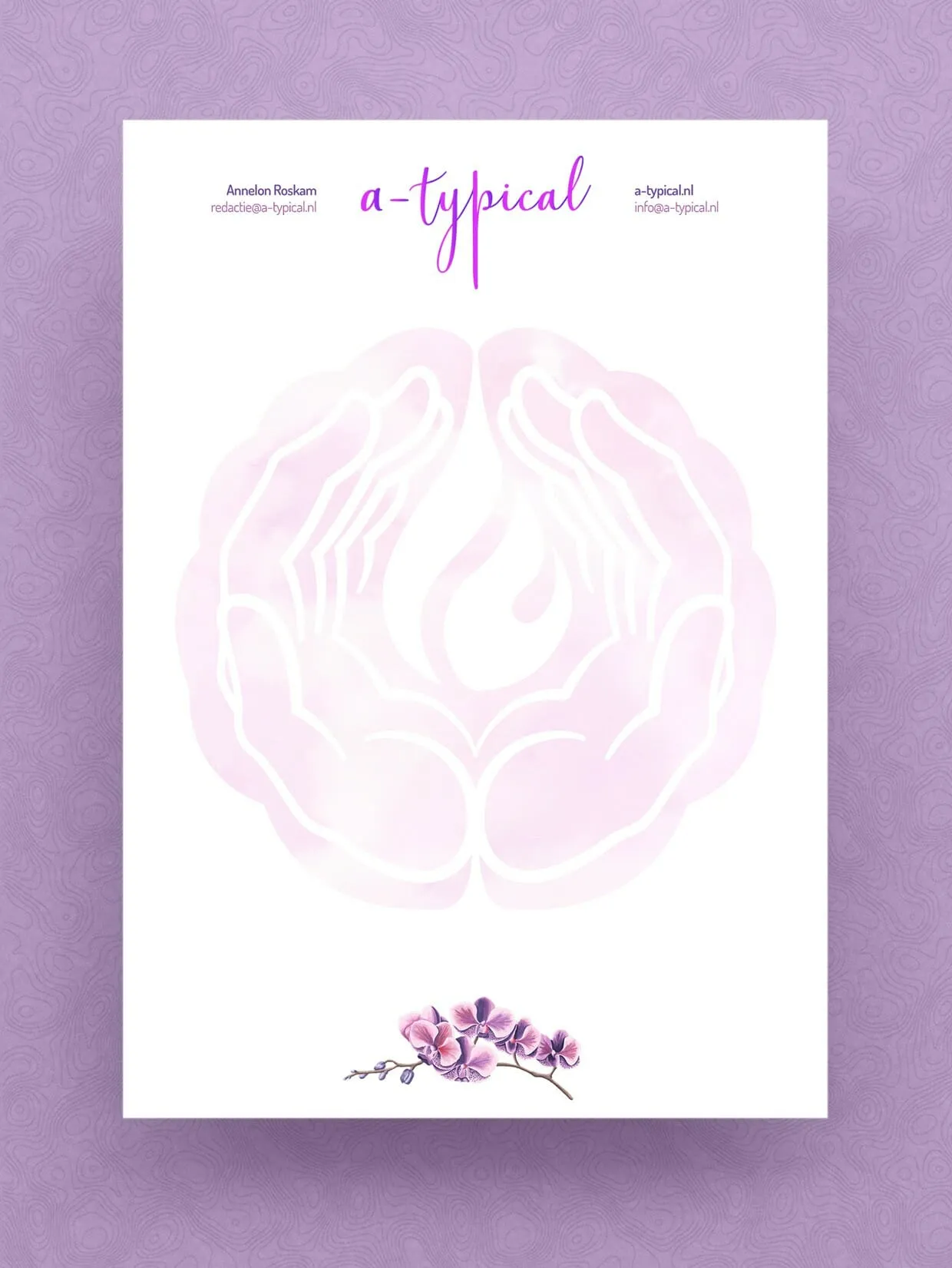
The mark is assembled out of symbols already associated with epilepsy rather than invented from nothing. The brain is the base, because it is the centre of the condition; its two hemispheres are divided by the palms and by the tip of the flame. The flame is hope, in the sense of a beacon. The hands cupped around it are the care a person with epilepsy has to take to keep their own wellbeing and their own hope alight. Read one way it is two hands and a flame; read another it is a brain, and neither reading is the decoration on top of the other.
The type is whimsical on purpose, for the movement and fluidity in it. The p of a-typical is centred deliberately under the emblem so that its descender doubles as a stem: brain, or flower. Purple is used because purple is the international colour for epilepsy.
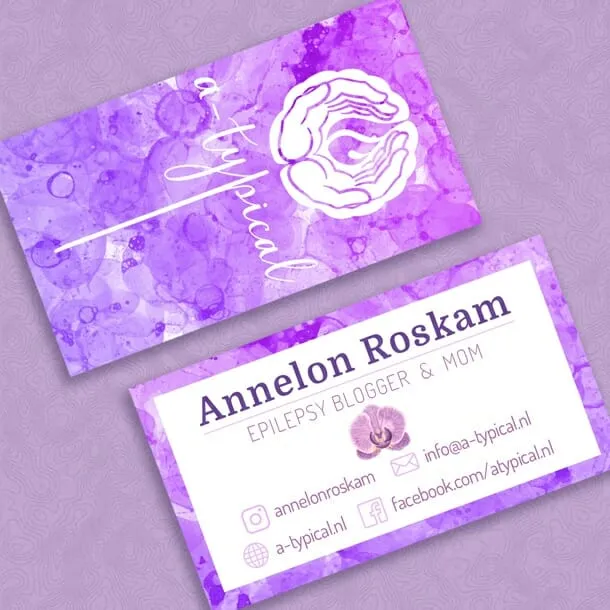
The business cards came out of the people rather than the condition: creative, energetic, vibrant. The watercolour bubbles stand for the unpredictability of the disorder and for how wide a spectrum it covers, which is the part that is hardest to draw and the part most worth drawing.
Epilepsy is the fourth most common neurological disorder and affects people of all ages. It means the same thing as “seizure disorders”. It is characterised by unpredictable seizures and can cause other health problems. It is a spectrum condition, with a wide range of seizure types and control varying from person to person, and public misunderstanding of it causes challenges that are often worse than the seizures.